

Most HOA boards discover the same thing during budget season: nobody actually knows what community-wide palm lighting should cost.
One vendor quotes $4,000. Another quotes $22,000. Both claim they’re lighting “the entrance.” Without knowing what drives the number, boards end up guessing, and guessing with reserve funds is a rough way to run a community.
Here’s what this article covers:
- What palm tree Christmas lighting actually costs per tree
- Full community package pricing by scope
- The variables that move your quote up or down
- What’s included in a professional installation quote
- HOA rules and approval steps to handle first
- Insurance and liability requirements boards must verify
- How to save money without cutting quality
- When to book for the best rate and schedule
We’ve been lighting Florida palms for over 33 years, and we’ve quoted everything from a single community entrance to full boulevard installations. Our commercial lighting team works with HOA boards across Collier, Lee, and Broward counties, so the numbers below reflect real Florida projects rather than national averages.
What Palm Tree Christmas Lighting Costs Per Tree
Individual palm pricing is the foundation of every community quote. Here’s how it breaks down.
The Baseline Per-Tree Range
Palm pricing depends almost entirely on two things: height and trunk circumference. A 12-foot Christmas palm and a 40-foot royal palm are completely different jobs requiring different equipment and crew size.
| Palm Height | Typical Per-Tree Cost | Equipment Needed |
|---|---|---|
| Under 15 ft | $150 to $250 | Ladder |
| 15 to 25 ft | $250 to $400 | Extension ladder or small lift |
| 25 to 40 ft | $400 to $700 | Bucket truck or 45-ft lift |
| 40 ft and above | $700 to $1,200+ | High-reach lift, larger crew |
What Changes the Number
Several details shift a per-palm quote significantly:
- Trunk only vs. trunk plus fronds. Frond work adds 30 to 50% to the per-tree cost because it requires more time at height.
- Wrap density. Tight spiral wraps with 2-inch spacing use significantly more product than loose 4-inch spacing.
- Trunk texture. Smooth royal palms need extra securing hardware. Rough-textured palms grip more easily.
- Access. A palm in an open median is faster than one wedged between monument signs and dense landscaping.
Why Palms Cost More Than Regular Trees
This surprises boards comparing quotes to mainland communities. A standard oak wrap happens from a ladder. A mature palm in most communities requires lift equipment, a certified operator, and often a traffic control plan if it sits near a street. That’s not markup. That’s the actual cost of doing the work safely. Our guide on how to decorate outdoor trees with lights covers the technique differences in more detail.
Full Community Package Pricing by Scope
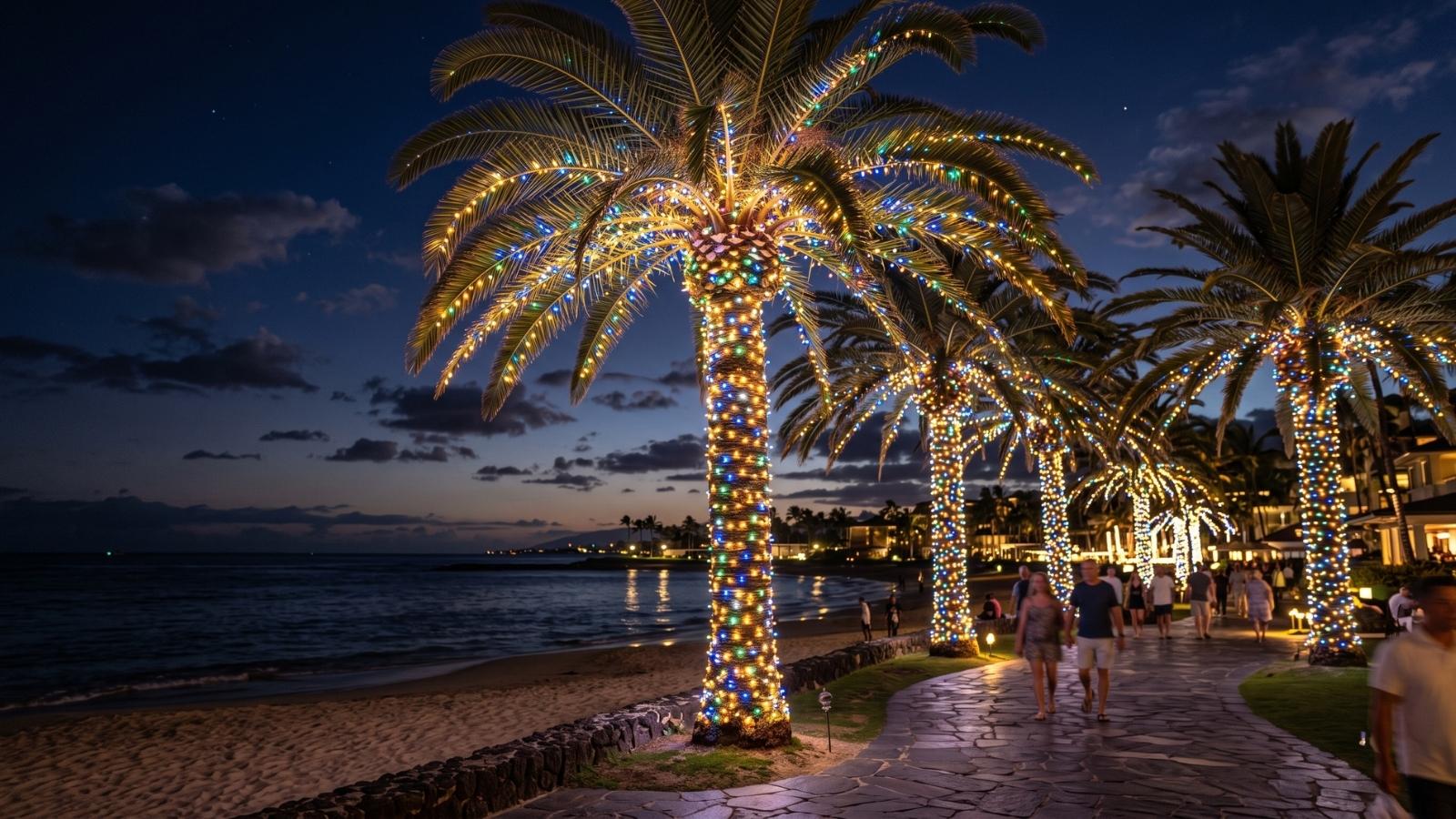
Community-wide pricing works differently from per-tree math. Here’s what HOA communities typically spend at each level.
Entry-Level HOA Packages
Starting around $3,500. This typically covers a single community entrance: two to four palms wrapped, monument sign lighting, and some accent greenery. It’s the most common starting point for smaller HOA communities testing professional installation for the first time.
Mid-Range Community Displays
$8,000 to $20,000. This scope covers a full community entrance plus interior common areas: clubhouse exterior, pool area, additional palm clusters along the main drive, and wreaths or garland on key structures. Most master planned communities land in this range. Adding interior clubhouse décor sits at the upper end of this band.
Large-Scale Community Wide Installations
$20,000 to $50,000+. Boulevard-length palm lighting, multiple entrances, clubhouse interior decorations, large display trees, and coordinated lighting across the whole community. This is the scope for large HOA communities and country clubs that treat holiday decorations as a genuine property asset.
Quick Reference by Community Size
Use this as a starting point before your next board meeting:
| Community Size | Typical Annual Budget | Common Scope |
|---|---|---|
| Small (under 100 homes) | $3,500 to $8,000 | One entrance, few palms |
| Mid-size (100 to 400 homes) | $8,500 to $20,000 | Entrance, clubhouse, common areas |
| Large (400+ homes) | $20,000 to $50,000 | Multiple entrances, community wide |
Pro tip: Boards that light an entire boulevard rather than a single entrance almost always secure a lower per-tree rate. Volume pricing is real, and it’s one of the few places where scaling up actually reduces your unit cost.
The Variables That Move Your Quote
Two communities of identical size can receive wildly different quotes. These are the factors behind that gap.
Scope Variables
What you’re lighting matters more than how many homes you have:
- Number of palms. More trees means better per-unit pricing through volume pricing.
- Coverage depth. Trunk-only wraps cost far less than full trunk-and-frond treatments.
- Additional elements. Monument signs, clubhouse rooflines, wreaths, and light-up displays each add line items.
- Interior decorations. Clubhouse trees and lobby décor are priced separately from exterior work.
Product Variables
The lights themselves represent a real portion of any community quote:
- LED vs. incandescent. Energy-efficient LED lights cost more upfront but carry dramatically lower operating costs across the holiday season. For a community running lights nightly through December, the savings are meaningful.
- Commercial grade vs. retail grade. UL-rated, weather-resistant materials survive Florida humidity and salt air. Retail product fails mid-season and creates callbacks.
- Lease vs. purchase. Some companies lease product, meaning it stays theirs. Others let the association own its lights outright.
Logistical Variables
These are the line items boards rarely anticipate:
- Install window. Booking inside the peak November rush costs more than booking a summer slot.
- Street access and traffic control. Palms along a public road may require permits or traffic management.
- Distance from a power source. Long runs and timer installations add electrical work to the quote.
What’s Included in a Professional Installation Quote
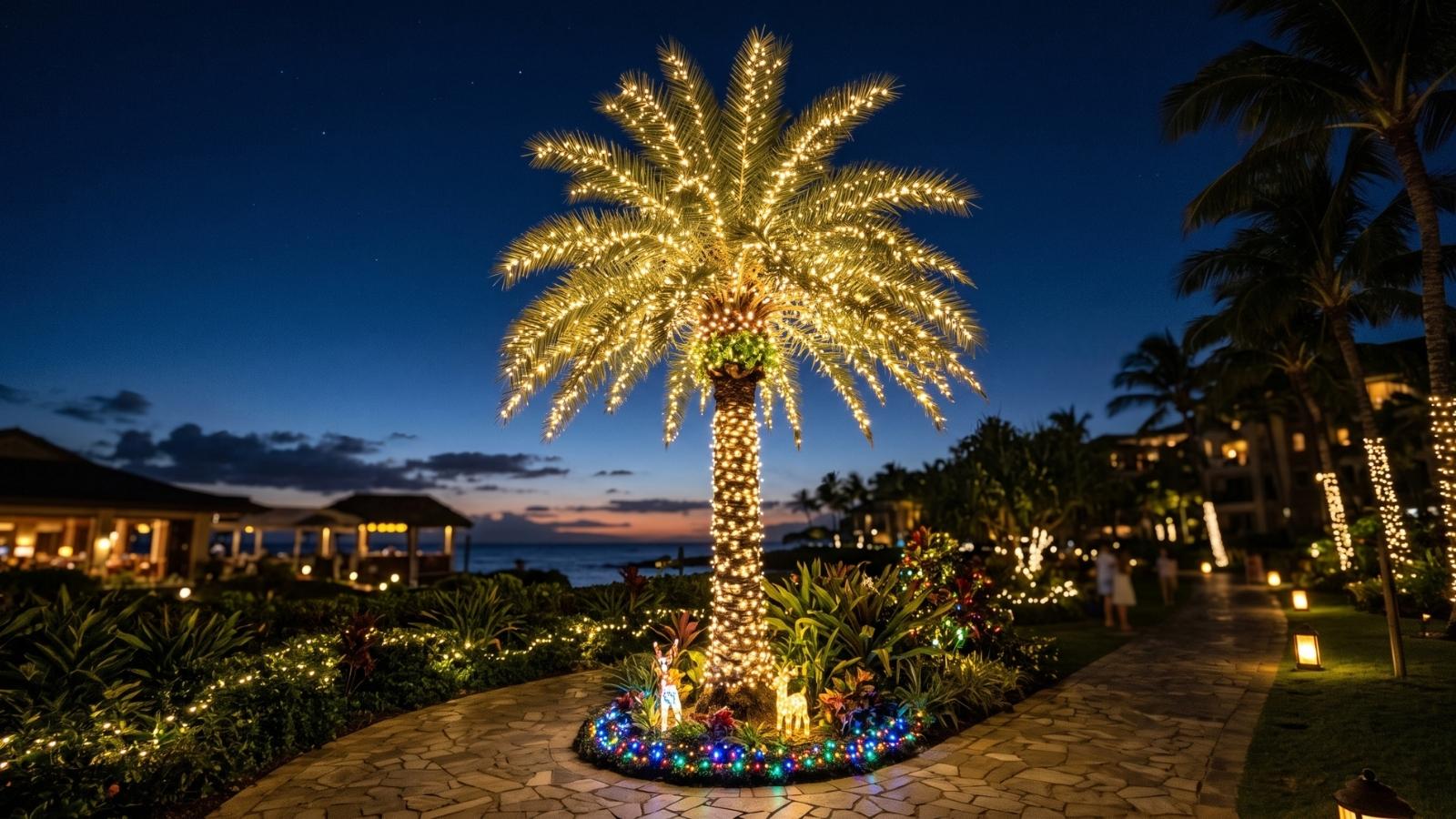
Not every quote covers the same scope, which is why comparing two numbers side by side can be misleading.
The Full-Service Standard
A legitimate HOA quote isn’t just labor. Here’s what a complete professional Christmas light installation package should include:
- Custom design built around your community’s aesthetic, not a template
- Commercial-grade LED product rated for outdoor use
- Full installation with proper equipment and a trained crew
- Season-long maintenance with response within 24 to 48 hours
- Scheduled takedown after the holidays
- Off-season storage of all product
What to Watch For
Read the fine print on scope. Some vendors quote install only and charge separately for takedown, which can add $500 to $2,500 to a community-scale project. Always confirm the full scope in writing before the board approves anything.
Why Full Service Matters for HOAs
Professional installation means minimal disruption to residents. Crews work during standard hours, stage equipment efficiently, and clear out fast. When something fails mid-season, one call handles it.
There’s no board member on a ladder in December, and no property manager fielding complaints about a dark entrance. We handle install, maintenance, and takedown as a single package for exactly this reason: one point of contact, zero hassle for the board. You can see the full scope on our holiday lighting and decor page.
HOA Rules and Approval Steps to Handle First
Budget is only half the conversation. The other half is making sure the project clears your own governing documents.
Check the Governing Documents
Before any board meeting vote, pull the community’s CC&Rs and architectural guidelines. Most HOAs regulate holiday displays in specific ways:
- Display window. Most HOAs allow lights up to 30 days before the holiday and require removal within two weeks after.
- Installation hours. Typical permitted work hours run 7 a.m. to 10 p.m.
- Brightness limits. Excessive brightness triggers architectural complaints and potential violations.
- Blinking lights. Many communities restrict or ban them entirely near roadways for driver safety.
- Footage caps. Some HOAs limit holiday lights to 100 to 200 feet per home, though common area installations usually fall outside these limits.
Our breakdown of typical HOA Christmas lighting rules covers what boards across Florida are actually enforcing.
Architectural Review Committee Approval
Timing here can delay a project by weeks if you miss it. For permanent lighting installations, most boards need architectural review committee sign-off. Temporary holiday lighting is treated differently from permanent decorative lighting under electrical standards, so clarify which category your project falls into early. If your community is weighing a year-round option, our permanent lighting page explains how that approval path differs.
Landscaping Protection Rules
This one catches boards off guard. Wrapping a palm too tightly can damage the trunk and actually violate HOA landscaping bylaws. Specify these requirements in any vendor contract:
- No nails, screws, or staples. Many HOAs explicitly prohibit anything that punctures palm trunks.
- Soft ties or specialized wrapping clips only. UV-resistant plastic hardware, never wire.
- No tight binding of fronds. Restricted fronds crack and die, leaving visible damage for years.
Insurance and Liability Requirements Boards Must Verify
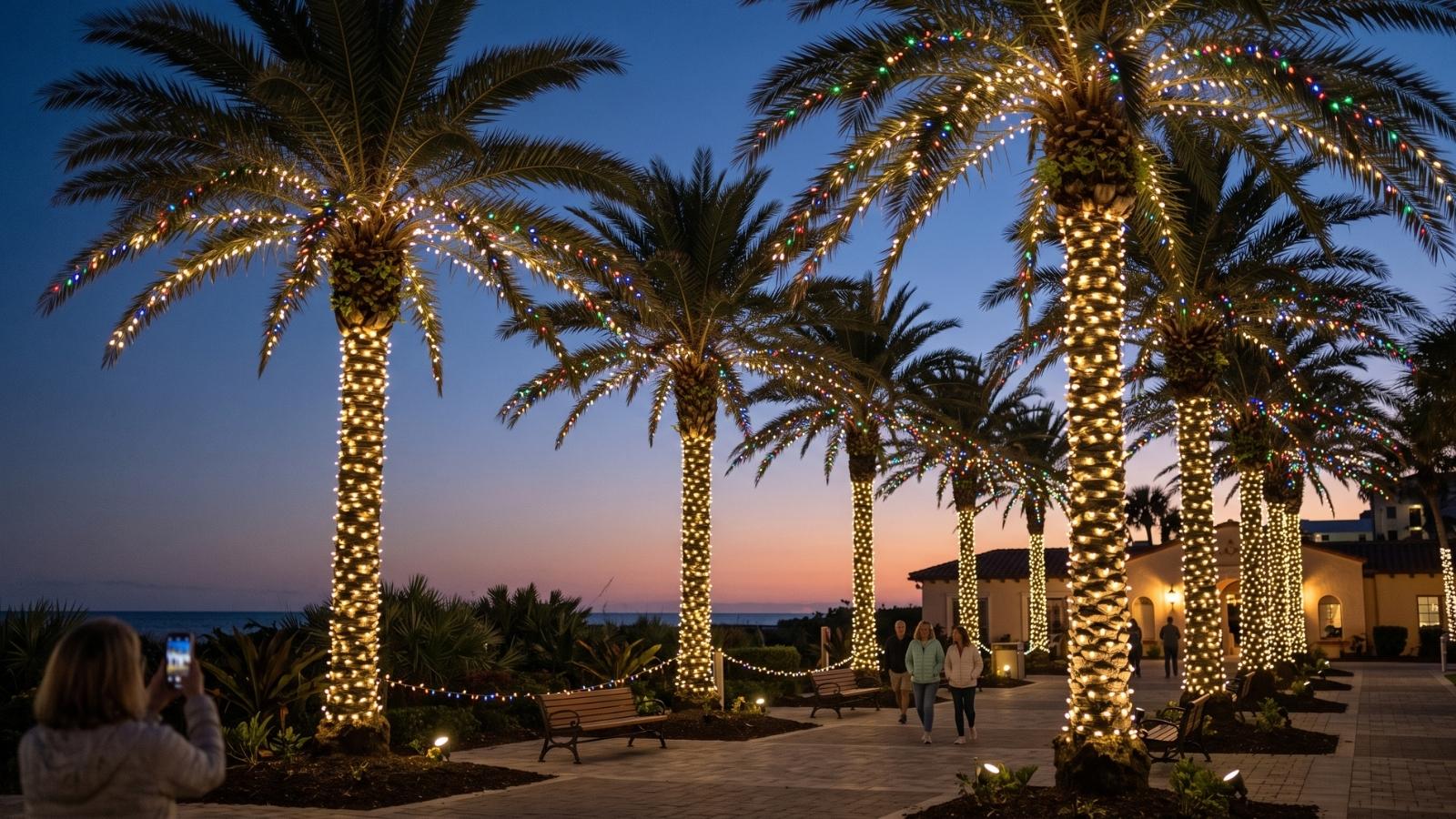
Vendor insurance is one of the few things on this list that can create personal exposure for board members. Handle it first.
What Every Board Should Require
Verify all of the following in writing before signing:
- General liability insurance with adequate coverage limits for community-scale work
- Workers compensation coverage for the install crew
- The association listed as additional insured on the vendor’s policy
- A current certificate of insurance provided before work begins
Why It Matters
If a crew member is injured on common property, or a lift damages a neighbor’s property, an uninsured vendor leaves the association exposed. That exposure can land on board members personally in some scenarios. It’s a five-minute verification that protects everyone. Our guide on what HOA insurance covers walks through where the master policy stops and vendor coverage picks up.
Electrical Safety Standards
Outdoor lights must be rated for outdoor use and connected to GFCI-protected circuits. Any professional should confirm this as standard practice, not as an upsell. If a vendor can’t speak to this clearly, that’s a signal worth paying attention to. Our crews are fully insured, and we provide certificates and additional insured endorsements to every HOA client before work begins.
How to Save Money Without Cutting Quality
There are real ways to bring a community quote down that don’t involve accepting a worse display.
Book Multi-Year Contracts
Multi-year agreements typically save 5 to 10% on total cost and lock in your install window before the season fills. For boards that want predictable annual budgeting, this is the easiest win available.
Lean Into Volume Pricing
Scope creep works in your favor here. If your community is considering lighting one entrance this year and another next year, quote both together. Volume pricing offers better per-unit rates, and doing it in one install visit is far cheaper than two separate mobilizations.
Choose LED Across the Board
The math is straightforward. Energy-efficient LED lights cut operating costs by 80 to 90% compared to incandescent. Over a full December of nightly operation across an entire community, that difference shows up on the association’s utility bill.
Book Early
Most boards wait until October. By then, the best install windows are gone and rates reflect scarcity. Communities that finalize board approval in summer get better pricing and better scheduling.
Prioritize High-Visibility Areas
If budget is tight, spend where people actually look. Concentrate on the community entrance, monument signs, and the main drive. A well-executed entrance creates more holiday cheer than thin coverage spread across the whole property. Our case studies show what a focused entrance install looks like at different budget levels.
When to Book for the Best Rate and Schedule
Timing affects both what you pay and whether you get the install window you want.
The Ideal HOA Timeline
Here’s the schedule that works for most boards:
| Timing | Board Action |
|---|---|
| June to July | Request site visit and design proposals |
| August | Present quotes at board meeting |
| September | Secure board approval, sign contract |
| October | Confirm install window and compliance details |
| November | Installation begins |
Why Early Booking Matters
Availability is the real constraint. Community holiday lighting projects require early scheduling because crews, lifts, and product all have finite capacity. A large HOA install can take multiple days and requires dedicated equipment. Boards that approve in September get first choice of dates. Boards that call in November take what’s left.
Working With Property Managers
If your community works through a management company, loop them in early. Property managers often coordinate multiple HOA projects simultaneously, and bundling communities under one vendor can unlock additional volume pricing across the portfolio.
We work directly with boards and management companies across Florida and can structure proposals either way. Request a free quote, and we’ll put together a scoped estimate your board can actually vote on.
Light Up Your Community the Easy Way with Trimmers Holiday Decor
Palm tree Christmas lighting costs for HOA communities come down to scope, height, and timing. Understand those three variables, and you can budget confidently instead of guessing at a board meeting.
Key takeaways from this guide:
- Per-palm costs run $150 to $1,200+ depending on height and equipment needed
- Entry-level HOA packages start around $3,500; full community displays reach $50,000
- LED product costs more upfront but slashes operating costs across the season
- Always verify general liability insurance and additional insured status
- Check display windows, brightness limits, and landscaping rules before approval
- Multi-year contracts and volume pricing save 5 to 10%
- Book by September for the best rate and install window
We’ve spent over 33 years lighting Florida palms for HOA communities, country clubs, and master planned communities. From a single entrance to a full boulevard, we handle design, install, maintenance, and takedown as one package. Get a free quote, and we’ll build a proposal around your community’s budget and vision.
FAQs
How much do palm tree Christmas lights cost?
Professional palm wrapping costs $150 to $400 for palms under 25 feet and $400 to $1,200+ for taller palms requiring lift equipment. Volume pricing lowers per-tree rates.
Do HOAs allow Christmas lights?
Yes, most HOAs allow holiday lights with rules. Typical limits include a 30-day display window before the holiday, removal within two weeks after, and no blinking lights near roadways.
How much should I pay someone to put up Christmas lights?
Residential installs average $220 to $683 nationally, or $2.50 to $7 per linear foot. HOA community packages start around $3,500 and scale with scope.
Do HOAs have to change the outdoor lamp?
HOAs maintain lighting in common areas, including entrances and clubhouses. Lighting on individual lots is usually the homeowner’s responsibility unless the CC&Rs state otherwise.


